How Does Local Climate (Minnesota / Twin Cities) Impact Deck Material Selection and Construction?
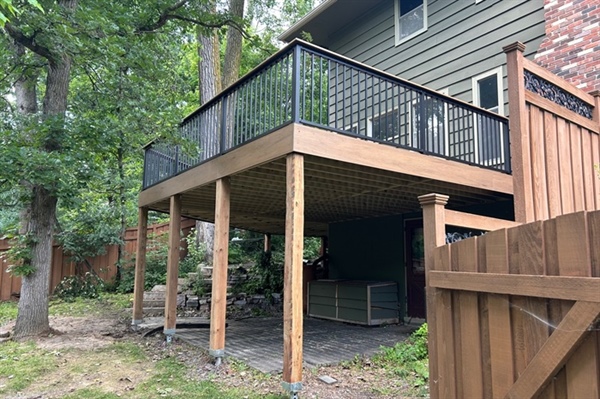
Building a deck in Minnesota means accounting for extreme temperature swings, freeze-thaw cycles, snow loads, and changing humidity. These conditions affect footings, framing connections, fasteners, and deck surface performance. If material selection or structural planning ignores local climate, the result can be premature fading, cracking, movement at joints, and accelerated deterioration.
The Twin Cities region also has a compressed outdoor building season and long winters, which influence installation timing, footing work, and inspection schedules. Contractors who build regularly in this climate adapt material choices, framing strategies, drainage details, and maintenance guidance to match regional conditions. BigDeck.com is here to outline the main climate-driven factors that shape deck design and construction in Minnesota.
What Freeze-Thaw and Snow Load Factors Should Be Considered in Deck Framing?
Freeze-thaw cycles are one of the most critical structural considerations in Minnesota. As soil freezes, it expands and can lift shallow footings. When it thaws, the soil settles again. To prevent this movement from transferring into the deck frame, concrete piers must extend below the local frost depth, which is commonly in the 42- to 60-inch range depending on jurisdiction and soil conditions.
Snow load is another major factor. Winter storms can place several thousand pounds of distributed load across the surface of a deck. Local building codes in the Twin Cities often require higher design snow loads than milder regions. That requirement influences joist spacing, beam sizing, and post layout. Structural connectors must be rated for exterior use, and fasteners need corrosion resistance because freeze-thaw cycles and road-salt contamination accelerate metal degradation.
Framing lumber selection also responds to climate forces. Pressure-treated lumber remains the standard for substructures, but treatment type and retention level matter when framing will see repeated wetting and drying. Protective membranes or tapes placed on top of joists help limit water absorption at fastener penetrations, reducing checking and splitting that occur when saturated members repeatedly freeze and thaw.
How Do UV Exposure and Seasonal Changes Affect Different Decking Materials?
Minnesota experiences long winter nights but also intense summer sun, which means deck surfaces must handle both cold and high UV exposure. Traditional wood expands and contracts with both temperature and moisture content. Over time, this movement leads to surface checking, cupping, and raised grain. Without regular sealing and maintenance, UV and moisture combine to break down the lignin in the wood, which causes graying and surface roughness.
Composite decking behaves differently. Wood-plastic composite boards include organic content, so they still respond to moisture, but their capped surfaces provide stronger resistance to UV fading and staining. High-quality composites used in the Twin Cities often feature multi-layer caps that block water intrusion and slow pigment loss. Darker colors can still heat up more in direct sun, which affects comfort and slightly increases thermal movement, so color choice should factor in sun exposure on south- and west-facing decks.
PVC boards, which contain no wood content, typically absorb minimal moisture and show very stable behavior in wet conditions. They often outperform composites and wood in freeze-thaw situations because water cannot migrate into the core.
However, PVC expands and contracts more with temperature changes, so installation must be done with accurate gapping based on board temperature at the time of installation. Across all material types, Minnesota’s seasonal swings highlight the need for products with documented performance in cold climates and strong UV environments.
What Drainage and Ventilation Practices Help Avoid Board Warping and Mold in Minnesota?
Drainage and airflow become central design details in a climate where snowmelt, spring rains, and humidity can keep deck structures wet for long periods. If water is allowed to pool on the surface or around framing, the risk of mold growth, surface staining, and board distortion rises sharply. A slight pitch—often around 1/8 inch per foot—encourages water to move away from the house and toward open edges, reducing standing water on the deck surface.
Gapping between boards must follow manufacturer guidelines to allow water and debris to pass through while still maintaining safe spacing for foot traffic. Inadequate gaps trap slush and organic material, which then freeze, thaw, and rot against the board edges and fasteners. For composite and PVC boards, correct spacing also allows for expansion and contraction without edge binding, which reduces the chance of buckling or warping.
Ventilation beneath the deck is equally important in Minnesota. Low-clearance decks built too close to grade trap moisture and slow drying. When the space under the deck cannot breathe, wood framing stays damp, and composite or PVC boards remain in contact with moist air for extended periods.
Standard practice in this region often targets at least 12 to 18 inches of clearance below framing, combined with open sides or vent openings that allow cross-flow. Joist flashing, capillary breaks at ledgers, and carefully detailed transitions at doors further limit water intrusion into critical structural connections.
How Does Winter Maintenance Differ for High-End Materials vs Traditional Wood?
Traditional wood decks in Minnesota demand regular maintenance to withstand long winters. Sealing schedules are often shorter than in milder climates because freeze-thaw cycles and UV exposure wear away protective coatings more rapidly. When snow removal is needed, metal shovels can damage softened winter wood fibers, leaving gouges that collect water and accelerate decay. Many homeowners also avoid harsh ice-melt products on wood because they stain and degrade the surface.
High-end composite and PVC materials require less intensive winter care. Many are designed to handle plastic snow shovels without noticeable surface damage, and their dense caps resist staining from common de-icing products when those products are used in line with manufacturer guidance. Since premium boards do not absorb water to the same extent as wood, they are less prone to freeze-driven cracking and splitting across the grain.
That said, all decks in Minnesota benefit from timely snow removal near access doors, stairs, and high-traffic areas to reduce slip hazards. Clearing heavy drifts off rails and privacy screens also limits long-term structural stress. For high-end boards, winter maintenance often becomes a matter of site safety and drainage management rather than ongoing protection of the material itself, which shifts the owner’s effort profile compared with a traditional wood structure.
What Timeline Constraints or Construction Windows Apply in Colder Climates?
Construction scheduling in Minnesota is tied closely to soil and temperature conditions. Digging and pouring concrete piers during deep frost requires specialized equipment, heated enclosures, and insulated blankets to keep concrete curing temperatures within acceptable ranges. These methods raise project costs, so many footing installations are planned for spring through late fall when the soil is workable.
Deck framing can continue later into the year if footings are already in place, but shorter daylight hours and frequent freeze-thaw cycles affect productivity. Cold-weather work also requires additional attention to worker safety, material handling, and snow management at the jobsite. Municipal inspections can be affected as well, since some jurisdictions reduce inspection windows during severe weather events.
Composite and PVC decking can technically be installed in winter, but temperature-dependent gapping becomes more complex at low temperatures. Installers must reference manufacturer charts to determine correct joint spacing based on board temperature so that expansion in summer does not cause boards to bind.
For many projects in the Twin Cities, the most efficient construction window runs from mid-spring through early fall, balancing footing feasibility, inspection access, stable weather, and predictable installation conditions.
